

My mother has a king-size bed she has slept in for thirty years. When her balance started to go at 79, that bed became the thing I worried about most. Not the stairs. Not the shower. The bed. Because falls out of bed happen in the dark, when nobody is watching, when your parent is half-asleep and their body does what it has always done -- reaches for the edge before their feet find the floor.
In twenty years managing a medical office, I have seen the intake paperwork for dozens of nighttime falls. The pattern is almost always the same: mattress too high, room too dark, nothing to hold onto. The good news is that every one of those risk factors is fixable -- usually in a single afternoon, usually for less than $50. Here is exactly how I approached it with Mom, step by step.
If your parent is getting up at night and has nothing to grab onto, this is the fix that takes ten minutes to install.
The Medline Bed Assist Bar is the single most-recommended bed safety tool in the medical offices I have worked in. Height-adjustable, no tools required, rated for up to 300 lbs. Over 15,000 families use it.
Amazon Check Today's Price on Amazon →Step 1: Bring the Mattress Down to a Safer Height
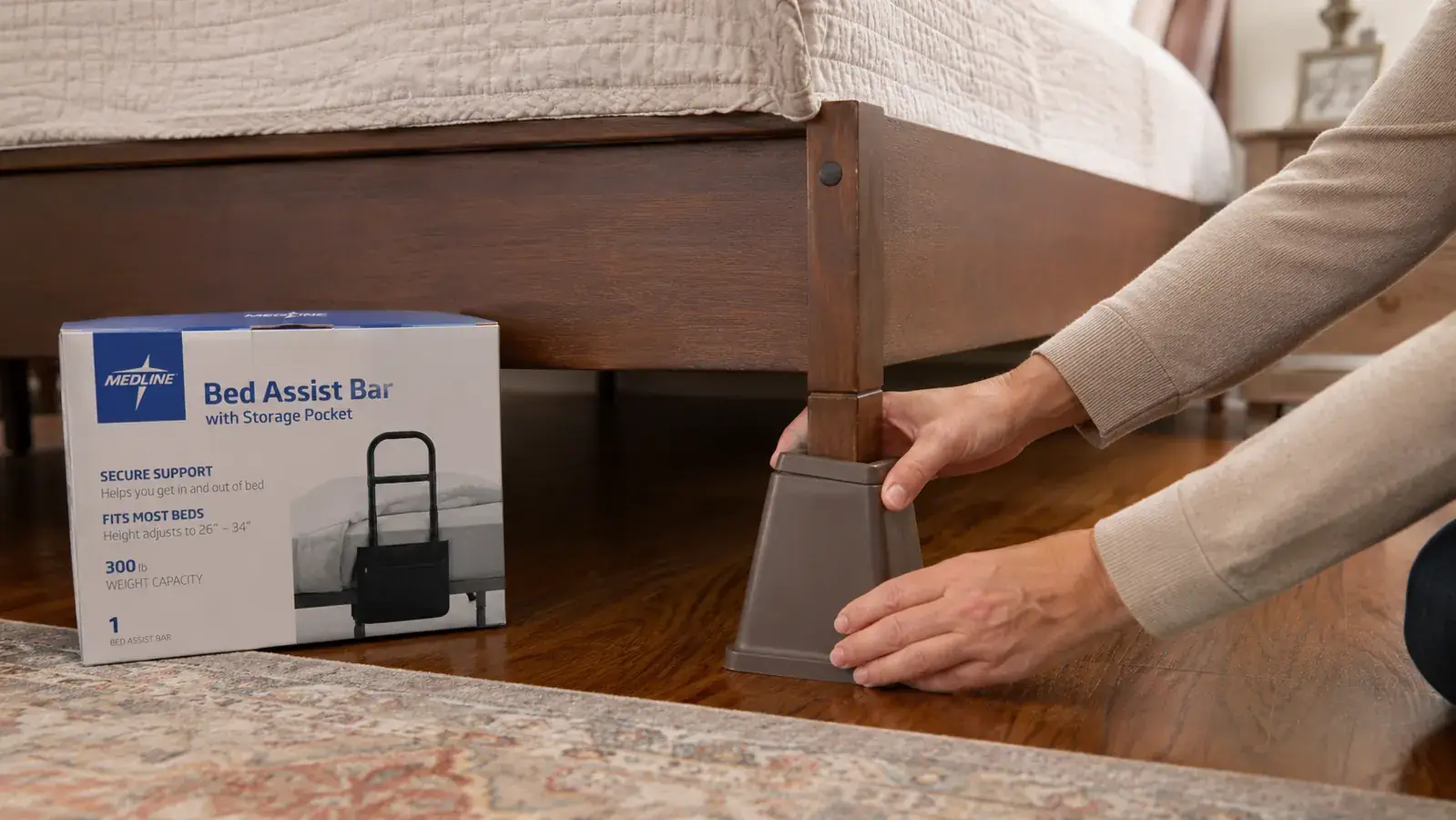
The standard recommendation from occupational therapists is that the top of the mattress should be level with the back of the knee when your parent is standing -- roughly 18 to 20 inches off the floor for most adults. If the bed is higher than that, getting out at night means lowering yourself off an elevated surface in the dark. That is where the injury happens.
Check your parent's bed. If the mattress sits at 24 or 26 inches, the frame probably has a traditional box spring. The simplest fix is to remove the box spring entirely and put the mattress on a platform-style frame or a set of low-profile slats. You can also buy low-profile box springs that reduce height by four to six inches. For some frames, swapping out the legs for shorter ones works. This one change alone reduces the distance of a stumble dramatically -- and it costs almost nothing if you already own the bed.
One caveat: if your parent needs a higher bed because they have knee pain and a low seat is hard to get out of, do not go too low. The goal is a height that is easy both to sit on and to stand up from. If you are not sure, have them sit on the mattress edge with their feet flat on the floor. Their knees should be at roughly a 90-degree angle. That is the sweet spot.
Step 2: Install a Bed Assist Rail for a Reliable Handhold
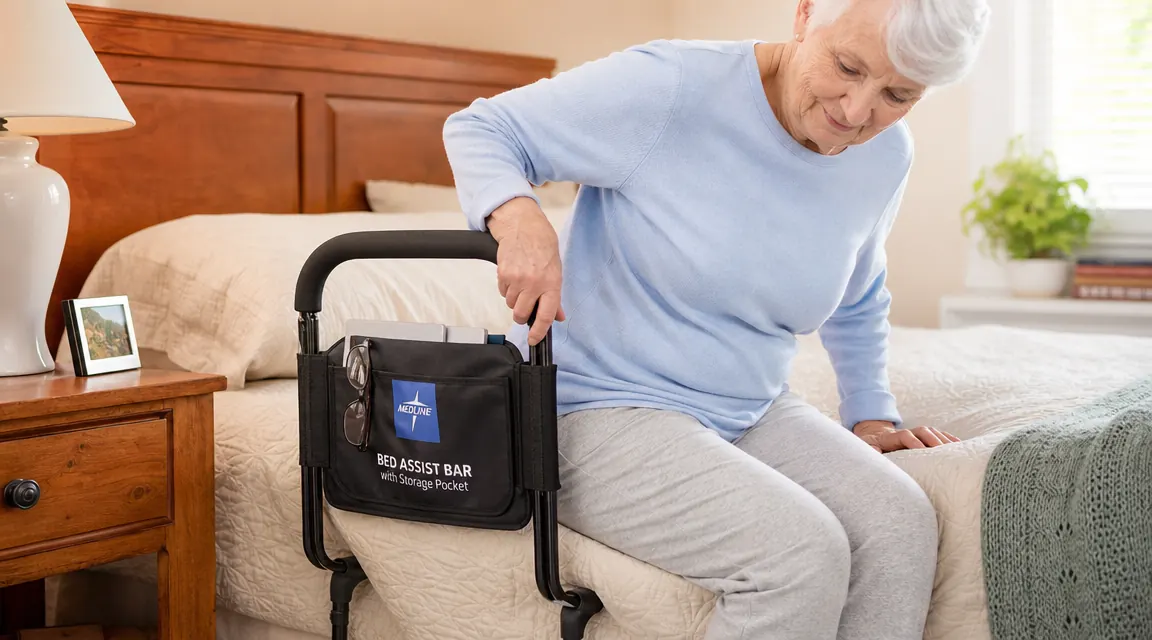
A lower mattress solves the fall-distance problem. A bed rail solves the other half of the equation: the moment of disorientation when your parent wakes at 2am, needs the bathroom, and has nothing to orient themselves against as they swing their legs to the floor. That disoriented pivot is when most bed falls happen. A solid grab bar next to the mattress changes the physics of that moment completely.
The Medline Bed Assist Bar (ASIN B006P1RL9G) is the one I installed for Mom, and it is the one I point families toward most often. It slides under the mattress and locks in place without drilling, tightening down with a wing nut tightener that anyone can manage. The handle adjusts from 19.5 to 23 inches above the mattress, and it includes a small storage pocket on the side -- we use it for Mom's TV remote, her lip balm, and a small flashlight. Four-point, four-six stars across more than 15,000 reviews. It holds up to 300 pounds, which covers the population of users who actually need it.
What I did not expect: Mom uses it every single time she gets up now, not just at night. It has become part of the routine. She pushes herself up with it in the morning, steadies herself getting into bed at night. It is less of a safety device and more of a normal part of how she moves around her bed -- which is exactly what a good assistive product should become. If you want the full breakdown of how it holds up over time, I have a detailed 11-month write-up at the link below.
One thing to know before you buy: this style of assist bar works with most standard mattresses that sit on a flat platform or box spring. It is not designed for adjustable bases or beds with slatted frames where the mattress can shift sideways. For those situations, a full-length bed guard attached to the frame itself is a better fit. I cover that comparison in depth in a separate article linked below.
A bed rail does not just catch a fall. It prevents the fall from starting -- because your parent knows exactly where to put their hand before they even try to stand up.
Step 3: Light the Path to the Bathroom
Most nighttime bed falls do not happen in the bed. They happen the moment a parent stands up in a dark room and takes the first step toward the bathroom. Their eyes have not adjusted. The floor looks flat when it is not. A forgotten pair of slippers is suddenly a trip hazard. This is the step that kills the good work you did with steps one and two if you leave it unaddressed.
The fix is cheap and permanent: plug-in amber nightlights in every outlet between the bed and the bathroom. Amber light specifically -- not cool white or blue-toned lights. Blue light suppresses melatonin and can make it harder to go back to sleep after a nighttime trip. Amber or warm-orange light preserves night vision better and keeps your parent sleepier during the trip. Put one at the bedroom baseboard near the door, one in the hallway, and one in the bathroom itself. The whole setup costs under $20 and runs on a light sensor so it only turns on in the dark.
While you are at it, look at the floor. Remove any rugs without non-slip backing. A small bathroom rug at the end of the bed that bunches when kicked is one of the most common fall triggers I see in patient intake notes. Replace it with a low-pile rug that has a rubberized back, or remove it entirely. The floor is not the hazard -- unsecured fabric on the floor is.
Step 4: Reconsider the Nightstand Setup
Most people think of the nightstand as a furniture piece. In a fall-prevention setup, it is a landmark. Your parent reaches for it when they wake up disoriented. They use its edge to steady themselves before they even reach for a bed rail. When it is the wrong height, too far away, or too cluttered to grab safely, it becomes a hazard instead of an anchor.
Three things to check. First, height: the top of the nightstand should be close to the height of the mattress, so your parent can reach it without leaning or straining. If the current nightstand is too low or too high, swap it or raise it with a simple furniture riser. Second, position: it should be close enough to touch from a lying-down position. If your parent has to reach significantly to get their glasses or their water, move it closer. Third, clutter: anything that can be knocked off and land on the floor between the bed and the bathroom is a future fall risk. Keep only essentials on the surface. A glass of water, reading glasses, a phone. That is the list.
If your parent uses the bed rail with a storage pocket, that pocket can actually replace some of what lives on the nightstand. Mom keeps her TV remote and a small flashlight in the Medline's side pocket, which cleared a lot of surface clutter and put things at arm's reach from the bed without requiring any furniture rearrangement at all.

Step 5: Add a Fall Mat If the Risk Is High
This step is not for everyone, and I want to be honest about that. A fall mat beside the bed is a high-risk intervention, meaning you use it when the steps above have been completed and you still have reason to believe your parent might slide or roll during sleep. That profile usually includes someone who is in the later stages of dementia, has had multiple bed falls in the past month, sleeps heavily due to medication, or has limited ability to reposition themselves during the night.
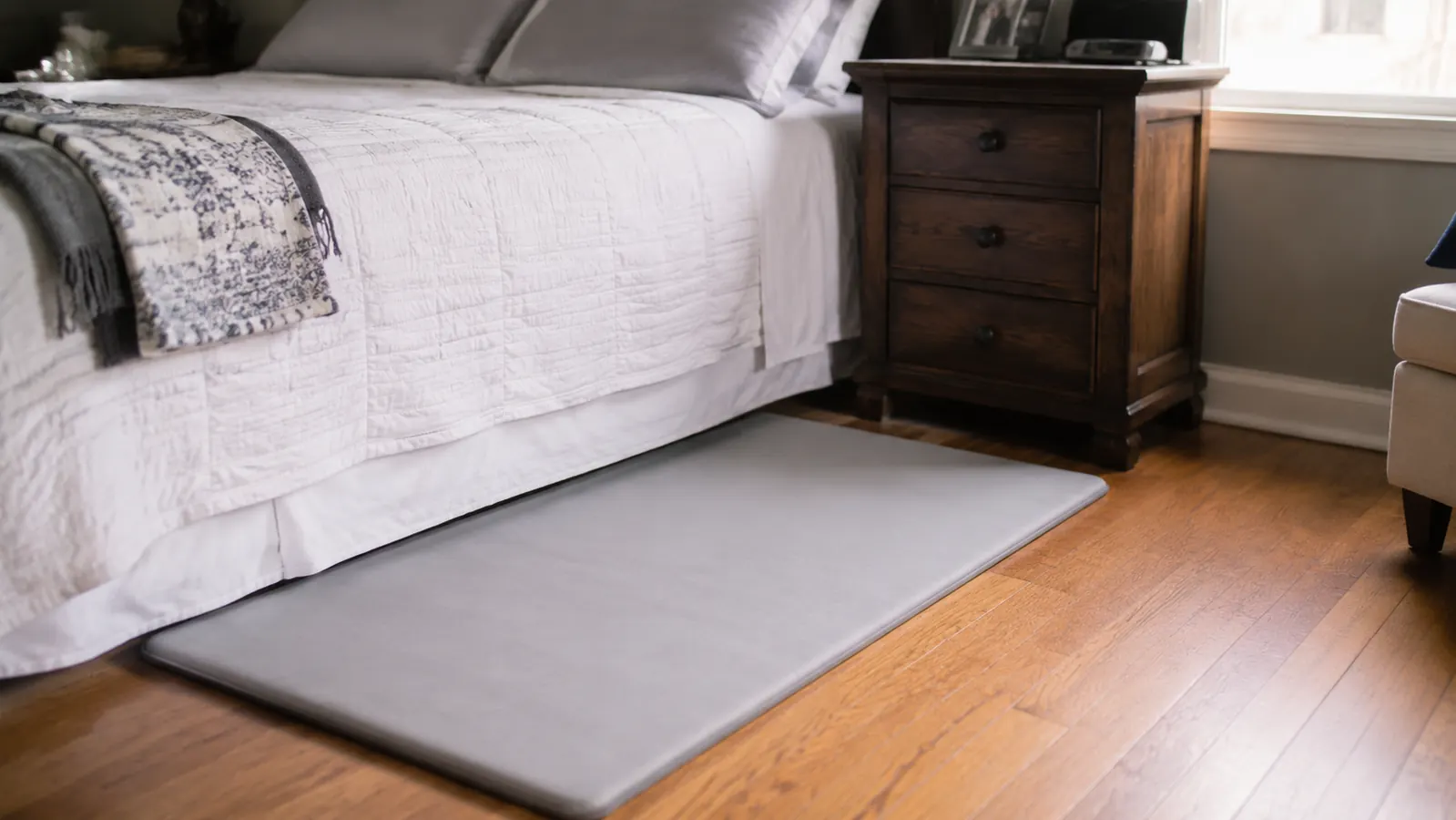
A bed fall mat is a thin, dense foam pad -- typically two to three inches thick and roughly the length of the bed -- that sits directly on the floor beside the mattress. It does not prevent a fall, but it reduces the injury severity when one happens. They are soft enough to cushion a landing, low enough not to create a new trip hazard when walking, and covered in a waterproof wipe-clean vinyl for hygiene. Look for something with a non-slip bottom so it does not slide when stepped on.
One important thing to check with your parent's doctor before using a fall mat: if your parent is on blood thinners or has osteoporosis, even a padded fall can cause injury. A fall mat is not a substitute for addressing the root causes. It is a last layer of protection after you have addressed everything else on this list.
What Else Helps
Medication review is worth a conversation with your parent's prescriber. A large percentage of nighttime falls in older adults are tied to medications that cause dizziness, blood pressure drops on standing (called orthostatic hypotension), or excessive sedation. If your parent is on a blood pressure medication, a diuretic, a sleep aid, or a muscle relaxant, ask the doctor directly: does this increase fall risk? Can the timing be adjusted? That one conversation can make everything else on this list more effective.
Sleep surface matters more than people expect. A mattress that is too soft can make it harder for an older adult to reposition themselves, which leads to restless sleep, more nighttime wakings, and more opportunities for a disoriented scramble to the bathroom. If your parent's mattress is more than eight years old and noticeably soft or sagging in the middle, that is worth addressing as part of the overall sleep safety picture.
Finally: talk to your parent about what they are actually doing when they get up at night. Are they getting up for water? Put a cup within reach of the bed rail so they do not have to walk to the kitchen. Are they getting up for the bathroom? Ask whether a bedside commode would reduce the walk. Are they getting up because they cannot sleep? That is a different conversation, and one worth having with their doctor. The more you understand the nighttime pattern, the more targeted the fix.
Steps one through four cost almost nothing. Step two costs about $33 and takes ten minutes.
The Medline Bed Assist Bar is the most practical thing you can add to your parent's bed this week. No drilling, height-adjustable, includes a side pocket for essentials. It is the first thing I recommend to every caregiver who asks me where to start.
Amazon Check Today's Price on Amazon →