
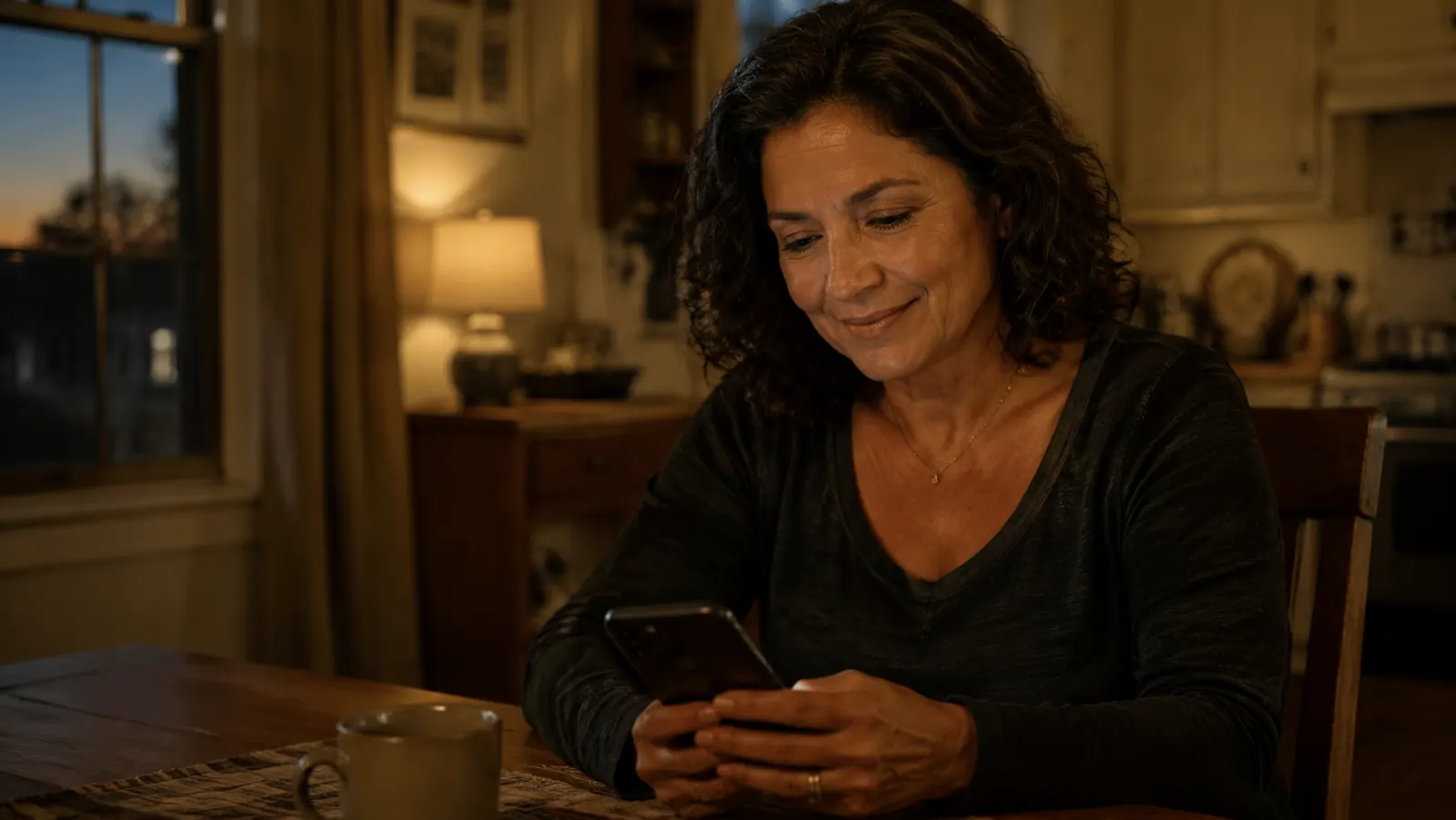
This is the story of how a $30 Blink Mini camera helped me sleep at night, told the way I would tell it to a friend on the phone.
My mother lives in a two-bedroom ranch house in Marysville, Ohio. She is 79. She has mild arthritis in both knees, takes five medications, and is sharper than most people I know who are half her age. She also lives alone. And I live in Austin, Texas, roughly 1,300 miles away.
For about three years, the distance felt manageable. We talked every morning. She had a neighbor who checked in. My brother, who lives forty minutes from her, swung by most Sundays. That was enough, until it wasn't.
It stopped being enough on a Tuesday in February when Mom did not pick up her phone at 8am. Not at 8:15. Not at 9. I called my brother in a panic. He drove over and found her perfectly fine, sitting in the backyard watching birds, her phone inside charging. She had not heard it ring. But by then I had already imagined everything.
I want to be honest about what those two hours felt like, because I think a lot of you know. Distance caregiving is not just logistical stress. It is imagining the worst with no information to push back against it. The helplessness is specific and grinding. I work a full day. I have two kids. I cannot drive to Ohio every time Mom misses a call. But I also could not keep doing this, the two-hour panics, the intrusive images, the checking and re-checking my phone.
Distance caregiving is not just logistical stress. It is imagining the worst with no information to push back against it.
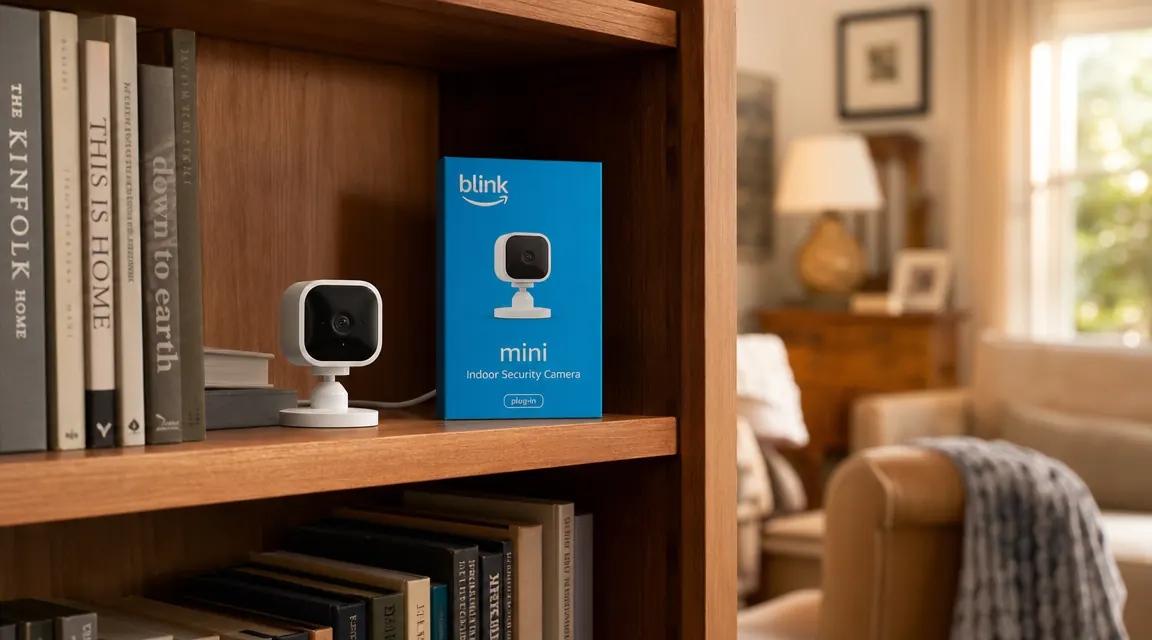
A friend of mine, whose mother-in-law had moved in with them after a fall, mentioned the Blink Mini camera in passing. She used it to keep an eye on the driveway. I went home and looked it up. Compact plug-in camera, 1080p video, night vision, motion detection, two-way audio. Works with Alexa. At that point it was under $35. I added it to my cart. Then I closed the tab.
I closed it because I had not talked to my mother about it yet. And that conversation mattered more to me than any product.
The Conversation I Was Afraid to Have
My mother is independent. She raised three kids largely by herself after my father died, she managed her own finances for forty years, and she has complicated feelings about accepting help. A lot of our parents do. The word 'camera' can land like a verdict: you are no longer trusted to be on your own.
I did not frame it that way. I told her the truth. I said: I had a two-hour scare last month and I am not handling it well. I am not worried about what you are doing. I am worried about whether you are okay. There is a difference. I told her I wanted to put one small camera in the living room, pointed at the main walking path from the hallway to the kitchen, and I asked her if that felt okay. I told her she could ask me to turn it off anytime, no questions.
She was quiet for a moment. Then she said, 'I worry about you worrying about me.' We ordered it that afternoon.
If you are carrying the same weight, the Blink Mini is the first step that actually helps.
At under $35 and no required subscription for basic use, it is the most practical peace-of-mind tool I have found for long-distance caregiving. Setup takes about ten minutes.
Amazon Check Today's Price on Amazon →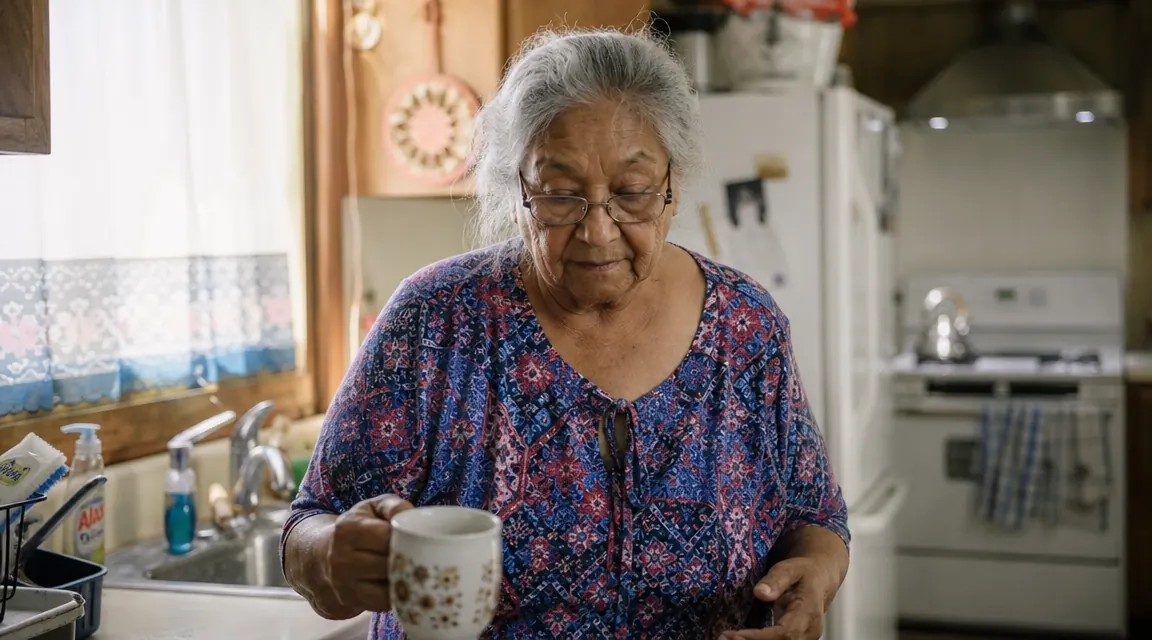
Setup, and the First Night
My brother set it up during his next Sunday visit. He is not especially tech-savvy, and he had it working in about fifteen minutes: plug it in, download the Blink app, connect to Mom's WiFi, aim it at the living room. That was it. I downloaded the app on my phone in Austin. I watched him wave at the camera from Mom's couch. I waved back through two-way audio. Mom thought this was hilarious.
I set up motion detection alerts for morning hours only, roughly 7am to noon. That is when Mom is most active, when she makes coffee, takes her medications, and watches the news. If I see motion in that window, I know she is up and moving. If I do not see any motion by 9:30, I check the live view. If the live view shows her in her chair with the TV on, I exhale and get on with my day.
The first night after we set it up, I slept through. I do not mean that lightly. I had not slept through without waking up thinking about Mom at least once in probably two years. The camera did not give me certainty. It gave me enough information to silence the catastrophic thinking. That is a meaningful difference.
What I'd Tell You If We Were Sitting at My Kitchen Table
The Blink Mini is not a medical device. It will not detect a fall. It will not call 911. If you need that level of monitoring, a medical alert system does different work. But if your parent is still mostly independent and the problem is the thousand-mile anxiety loop in your own head, this camera addresses that specific thing in a way that nothing else I tried actually did.
Have the conversation before you buy it. Ask permission. Frame it around your own worry, not their competence. Most parents, once they understand that you are asking for yourself as much as for them, will say yes. Mine did.
It has been eight months now. Mom has started checking herself in the camera sometimes, adjusting her sweater when she walks through the living room because she knows I can see. She jokes about it. Last week she held up a piece of paper to the camera that said 'I'm fine.' That small, ridiculous moment made me so happy I cried a little at my desk in Austin.
The worry does not disappear. But it gets quiet enough to live with.
The Blink Mini is what we use. It is small, reliable, and the setup is genuinely simple enough for a non-technical sibling to handle in a single visit. If you are ready to try it, today's price and shipping details are on Amazon.
Amazon Check Today's Price on Amazon →